A brown ring spreading across a bedroom ceiling after a southerly change. A cracked ridge cap lying on the driveway. That is how most roof jobs around here start, and both of those are symptoms of the same thing: a Macarthur roof that has quietly run out of road.
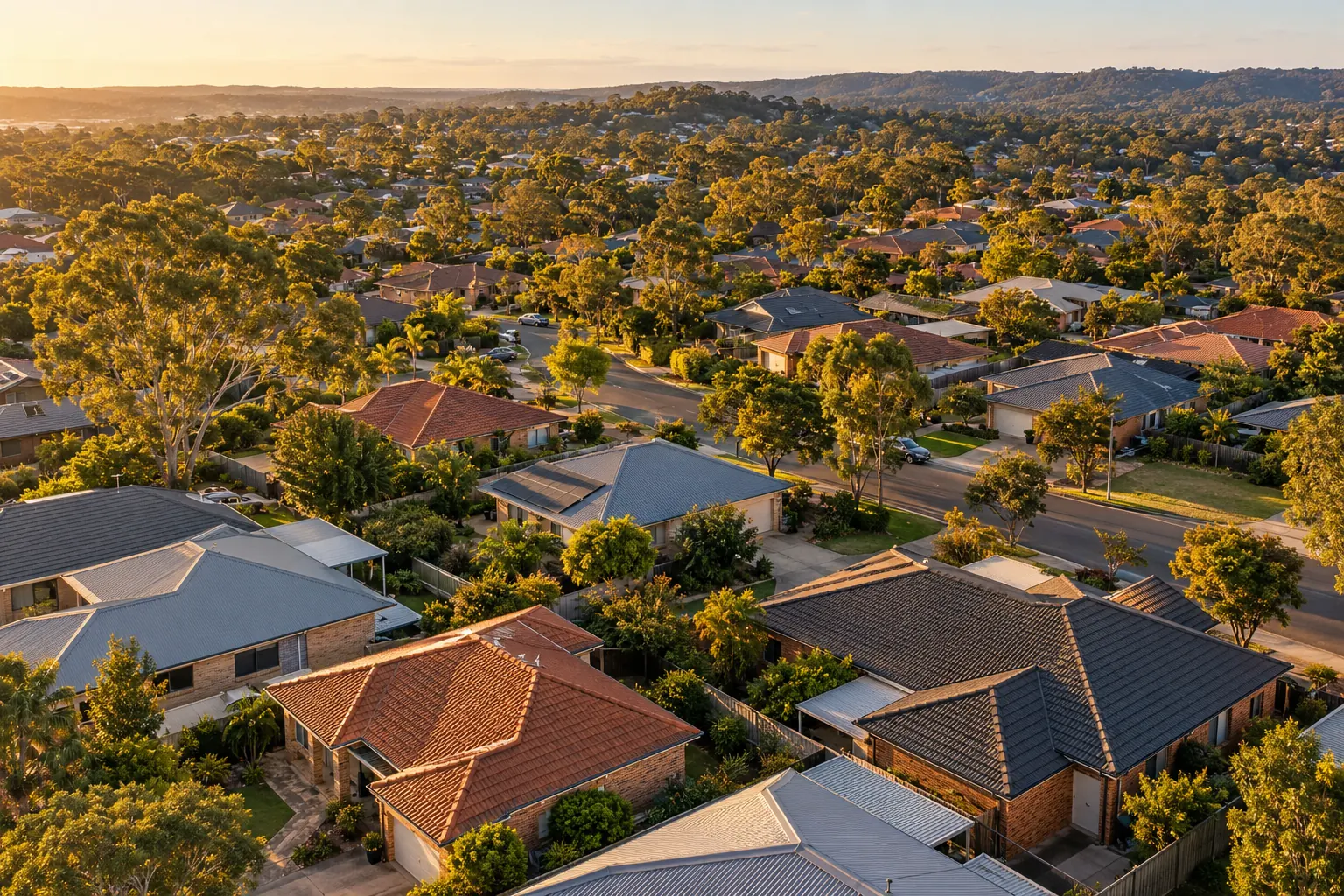
We arrange roof repairs, restorations and full re-roofs across the whole district — the 1970s and 80s tile estates on the valley floor at Leumeah, Minto and Claymore, the older streets behind Queen Street in Campbelltown, the Nepean River flats at Camden and Elderslie, and the new Colorbond estates out along The Northern Road at Oran Park and Gregory Hills. Call (02) 4601 5100 for a free inspection and a written quote. No obligation attached to either.
Three ages of roof, three sets of faults
Macarthur is unusual. Most Sydney districts have housing stock spread across a century. Ours arrived in three distinct waves, so the roofs fail in three distinct ways — and they fail on a schedule.
The brick-and-tile belt, 1970s to 1990s
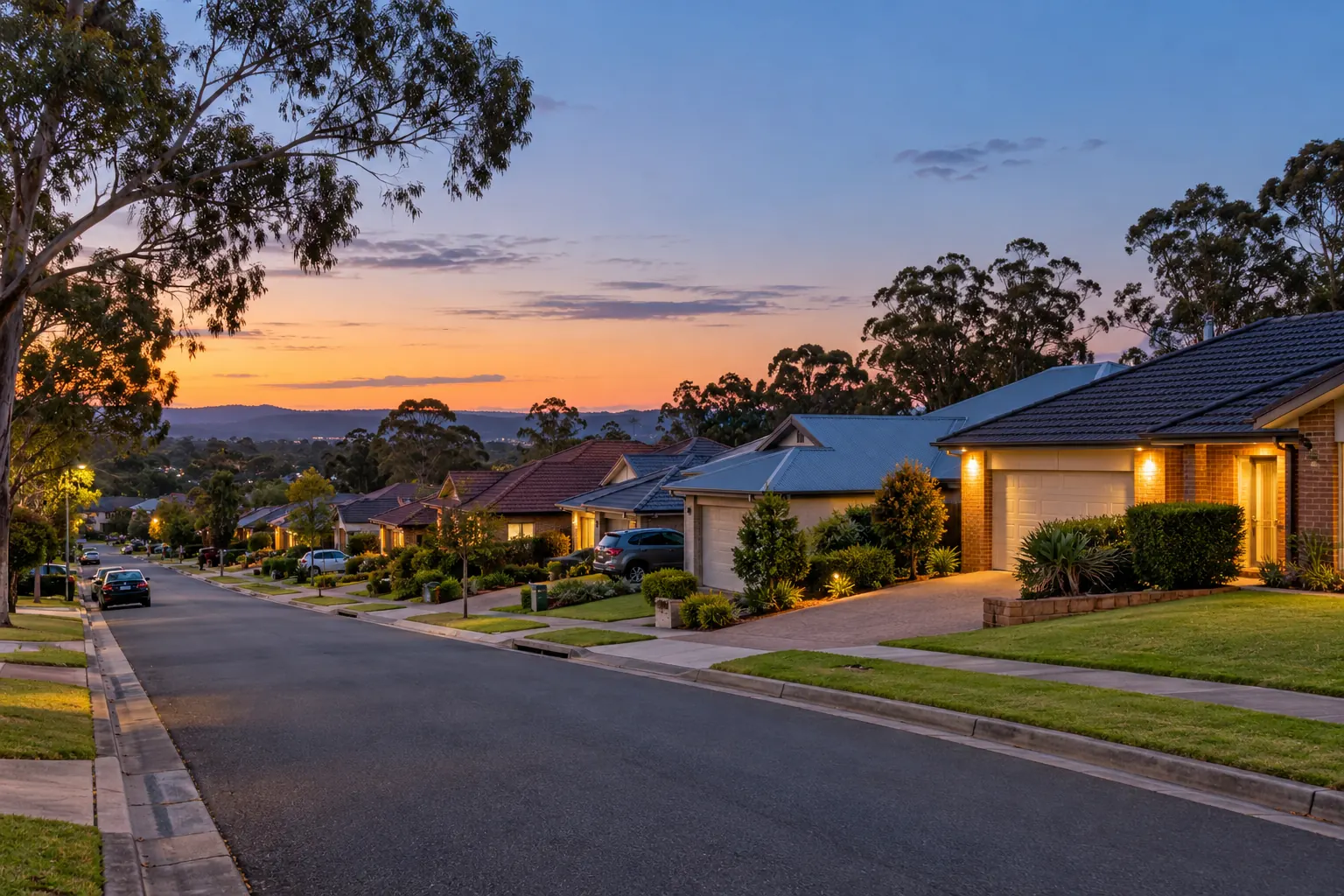
Campbelltown's growth decades put an enormous number of concrete-tile roofs on the ground in a short window. The State Government housing programs at Airds, Claymore, Minto and Macquarie Fields, and the private estates that followed at Eagle Vale, Eschol Park, Raby, Kearns, Ambarvale and Rosemeadow, were built close together in time. They are now ageing close together in time too.
The tiles themselves often have years left. What does not is everything holding them in place:
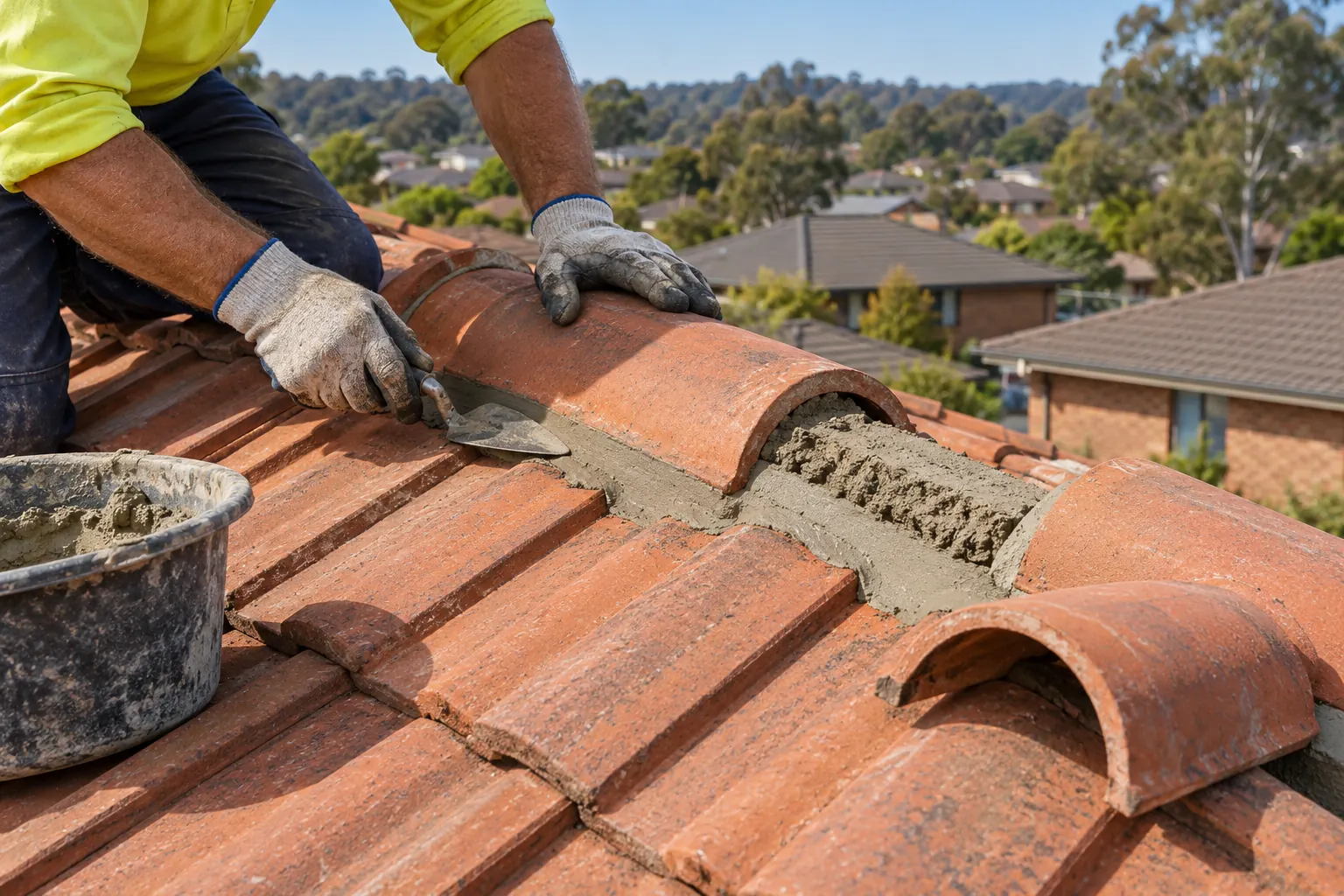
- Ridge and hip pointing. Rigid cement mortar, cooked through forty-odd inland summers, crazes and drops out in crumbs.
- Bedding mortar under the caps goes soft, and caps start to rock.
- Galvanised valley irons rust through from the bottom of the valley upward, usually under a dam of leaf litter.
- No sarking. A lot of roofs from this era were laid straight onto battens, so wind-driven rain that gets past a tile has nothing between it and your ceiling.
Camden, Elderslie and the heritage pocket
West of the hills the picture changes completely. Around Argyle Street, out to Elderslie and the old Camden rail alignment, you get terracotta tile, early corrugated steel, verandah skillions, parapets and box gutters — roof forms that need the right profile rather than the cheapest sheet.
The Camden town centre sits inside a heritage conservation area, and work on a listed building or inside the conservation area is assessed on whether the roof form and material suit the building. The equivalent in Campbelltown is the Queen Street Heritage Conservation Area. Plain like-for-like re-roofing is usually exempt development; heritage streets are where that stops being true, and that is worth knowing before anyone orders sheets.
The new Colorbond estates
Oran Park, Gregory Hills, Harrington Park, Mount Annan and Currans Hill are a different trade again. Low pitches, narrow lots, big alfresco additions, parapet walls with concealed gutters, and solar arrays on nearly everything.
On a ten to twenty year old metal roof out there, the sheet is rarely the problem. The problems are the EPDM washers under the screws going chalky and hard after sustained UV, flashings at the parapet, downpipes that were sized for the original footprint and not the extension, and penetrations that have been walked over by three different trades.
Hail and heat do most of the damage out here
Two things define roofing west of the Georges River. The first is heat: Macarthur sits a long way back from the coast and gets the full inland summer, which is what destroys rigid ridge mortar and ages exposed rubber and sealant faster than the brochure says.
The second is hail. Western Sydney sits in a storm corridor, and the damage pattern is predictable. Tiles crack, chip and lose their surface coating. Metal dents across the pans and can split at the ribs if the stones are big enough. Whirlybirds shred, skylight domes craze, gutters pock and stop draining properly.
Half of post-storm roofing is paperwork, not tin. We photograph and measure what we find and give you a written report your insurer can actually use. See storm and emergency roof repairs for how a make-safe works.
How a job runs here
- Free inspection. Someone gets up on the roof and into the ceiling space where access allows, and tells you what is actually wrong.
- Written quote, itemised, so you can see what is repair and what is replacement. Nothing to sign on the day.
- The work. Carried out by established, licensed and insured roofing contractors working to NSW Fair Trading requirements. Residential work over $5,000 gets a written contract; over $20,000 the insurance certificate is attached to it.
- Workmanship warranty, in writing, on completed work.
What actually moves the price
We will not quote a roof over the phone, and nobody honest will. What the inspection is measuring is: total roof area, pitch, how many hips and valleys there are, single or double storey, truck and ladder access on the block, the material you want, and how far water has already travelled into battens and timber.
Two local factors come up often. Blocks that climb toward the Scenic Hills can need extra edge protection. And on pre-1990 homes, outbuildings and eaves sheeting can be asbestos cement — more than ten square metres of bonded material has to be removed by a licensed asbestos removalist who notifies SafeWork NSW five days beforehand. That is a cost line, and we flag it before you are surprised by it.
Where we work
Twenty-eight suburbs across the Campbelltown and Camden council areas, from Glenfield in the north to Menangle Park in the south and Oran Park in the west. The full list, with what we see in each area, is on the service areas page.
Start with a roof inspection and report if you are not sure what you are dealing with, or call (02) 4601 5100 and describe what you have noticed. If it turns out to be a half-hour repair, we will say so.
Local specialists you can rely on
-
Free Roof Inspection & Quote
We inspect at no cost and give you a written quote with the work itemised.
-
Licensed & Insured Contractors
Work is carried out by established, licensed and insured roofing contractors working to NSW Fair Trading requirements.
-
Hail & Storm Damage Claims
Documented inspections and reports suitable for an insurance claim after a storm.
-
Workmanship Warranty
Every job carries a written workmanship warranty.
What we do across Macarthur
-
Roof Repairs
Leaks, slipped tiles and cracked pointing across Macarthur, where hail dents and heat-stressed ridge mortar account for most call-outs.
Learn more -
Roof Replacement
Re-roofing in tile or Colorbond for the ageing brick-and-tile estates around Campbelltown and the newer builds at Oran Park and Gregory Hills.
Learn more -
Metal & Colorbond Roofing
Colorbond re-roofing and new installs across Macarthur, including full tile-to-metal conversions on 1970s and 80s homes.
Learn more -
Roof Restoration
A cheaper alternative to replacement for Macarthur tile roofs: pressure clean, rebed and repoint the ridges, then recoat.
Learn more -
Gutter Repair & Replacement
Gutter and downpipe replacement sized for Macarthur storm runoff, plus leaf guard where gums overhang the roofline.
Learn more -
Storm & Emergency Roof Repairs
Same-day make-safe after a Macarthur hailstorm, with photographed damage reports you can hand straight to your insurer.
Learn more -
Roof Inspections & Reports
Written roof reports across Macarthur for buyers, sellers, landlords and insurance claims.
Learn more
On the tools across the local area
Frequently asked questions
My ridge caps look powdery and the mortar is dropping out. How urgent is that?
Not an emergency, but do not leave it a second summer. Once the bedding mortar under a ridge cap crumbles, the cap can shift in wind and rain tracks sideways under it into the batten cavity. On an unsarked tile roof that water reaches the ceiling. Re-bedding and re-pointing the ridges is a contained job if you catch it while the tiles underneath are still sound.
Which council do I deal with out here, Campbelltown or Camden?
It depends on the suburb. Campbelltown City Council covers Campbelltown, Leumeah, Minto, Ingleburn, Macquarie Fields, the Ambarvale and Rosemeadow side and Menangle Park. Camden Council covers Camden, Elderslie, Narellan, Mount Annan, Currans Hill, Harrington Park and Oran Park, with Gregory Hills straddling the two. Most like-for-like re-roofing is exempt development either way, but heritage streets are the exception.
Do you look at hail damage for an insurance claim?
Yes. After a hail event we inspect, photograph and measure what we find, then put it in a written report you can hand to your insurer. Tile roofs show cracked and chipped tiles and a pocked surface coating; metal roofs show dents through the pans plus damage to whirlybirds, skylight domes and gutters. We make the roof safe first and sort the permanent repair once the claim position is clear.
Is it better to restore the tiles or start again with metal?
If the tiles themselves are intact and it is the pointing, valleys and surface coating that have gone, a restoration usually gives the best value. If tiles are brittle and breaking underfoot, or you have had repeated leaks in different spots, replacement is the honest answer. We will tell you which one your roof is, and we are happy to say a restoration is enough when it is.
How soon can someone get up there and look?
Call (02) 4601 5100 and we will book the inspection at a time that suits, usually within a few days for a non-urgent job. Active leaks and storm damage jump the queue, because the priority there is a make-safe before the next band of rain. The inspection and the written quote both cost you nothing.
Get your free quote today
Tell us what you need and we'll get straight back to you. Prefer to talk? Call (02) 4601 5100 and speak to someone local.
Call (02) 4601 5100- Free Roof Inspection & Quote
- Licensed & Insured Contractors
- Hail & Storm Damage Claims
- Workmanship Warranty