Roof Repairs
Leaks, slipped tiles and cracked pointing across Macarthur, where hail dents and heat-stressed ridge mortar account for most call-outs.
Learn more →Full re-roofing in tile or Colorbond for Macarthur homes, from 1970s Campbelltown brick-and-tile estates to Camden and Oran Park. Free written quote.
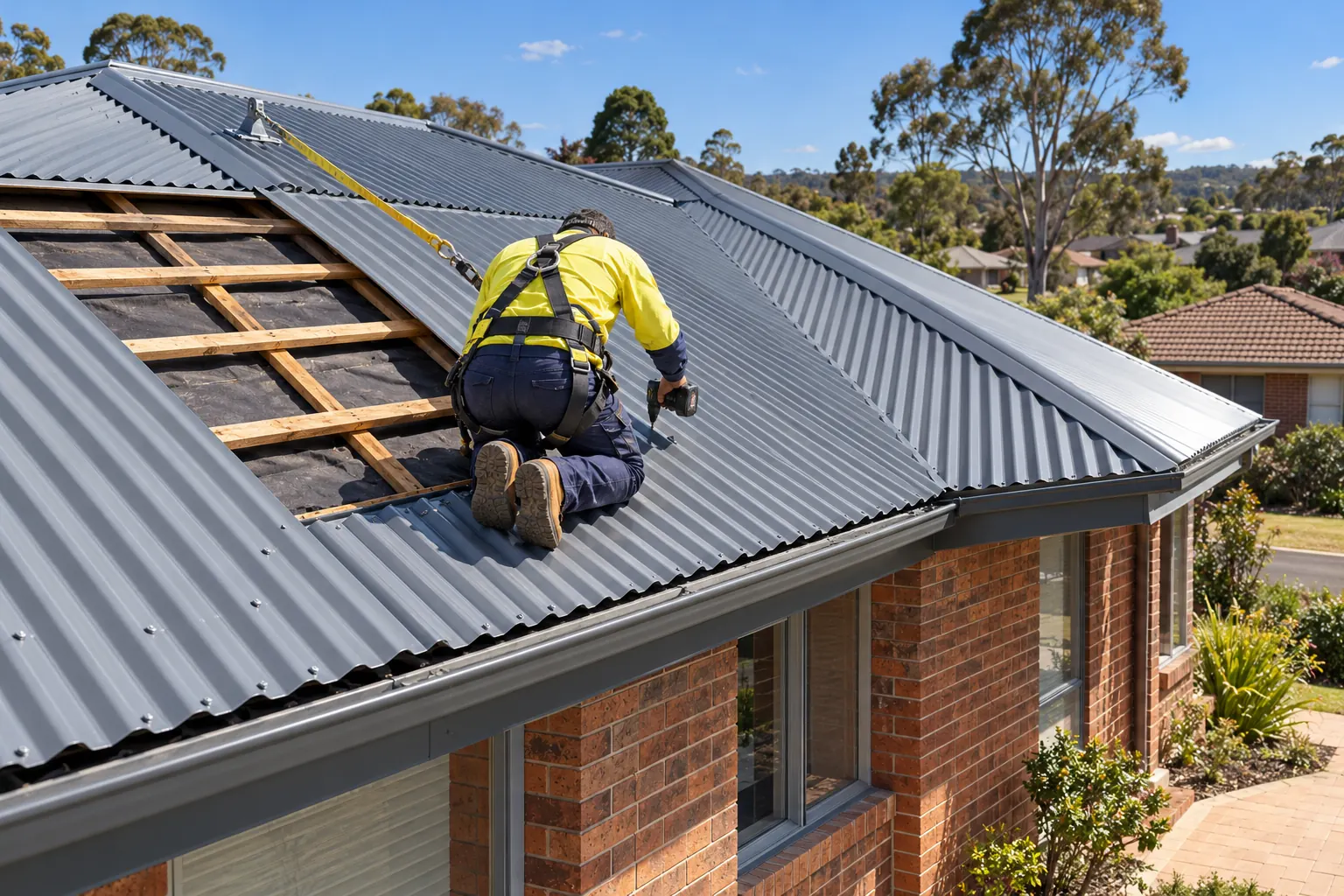
Leaks, slipped tiles and cracked pointing across Macarthur, where hail dents and heat-stressed ridge mortar account for most call-outs.
Learn more →Colorbond re-roofing and new installs across Macarthur, including full tile-to-metal conversions on 1970s and 80s homes.
Learn more →A cheaper alternative to replacement for Macarthur tile roofs: pressure clean, rebed and repoint the ridges, then recoat.
Learn more →Gutter and downpipe replacement sized for Macarthur storm runoff, plus leaf guard where gums overhang the roofline.
Learn more →Same-day make-safe after a Macarthur hailstorm, with photographed damage reports you can hand straight to your insurer.
Learn more →Written roof reports across Macarthur for buyers, sellers, landlords and insurance claims.
Learn more →There is a point where you stop repairing a roof and start replacing it. Across the Campbelltown estates, a lot of houses reached that point in the same handful of years — because they were built in the same handful of years.
Full re-roofing in tile or Colorbond, across Campbelltown, Camden and the Macarthur growth corridor. Free inspection, written quote, nothing to sign on the day. (02) 4601 5100.
Replacement is a big call and it should be argued for, not assumed. These are the things that tip a roof over the line:
If none of that describes your roof, you probably want roof restoration instead, and we will say so.
Both are legitimate. The choice depends on the house and the street.
Staying with tile keeps the look of the original estate, which matters on a street where every other roof is the same profile, and matters more in the Camden and Queen Street heritage areas where roof form is assessed. Modern concrete tiles are a better product than their 1970s ancestors.
Going to metal is the more common swap out here. Colorbond steel sheds water fast at low pitch, carries nothing that can be cracked by hail, has no pointing to perish in the heat, and weighs far less than concrete. It also lets you run anticon blanket or thicker insulation over the frame during the install, which is worth real money in a Macarthur February.
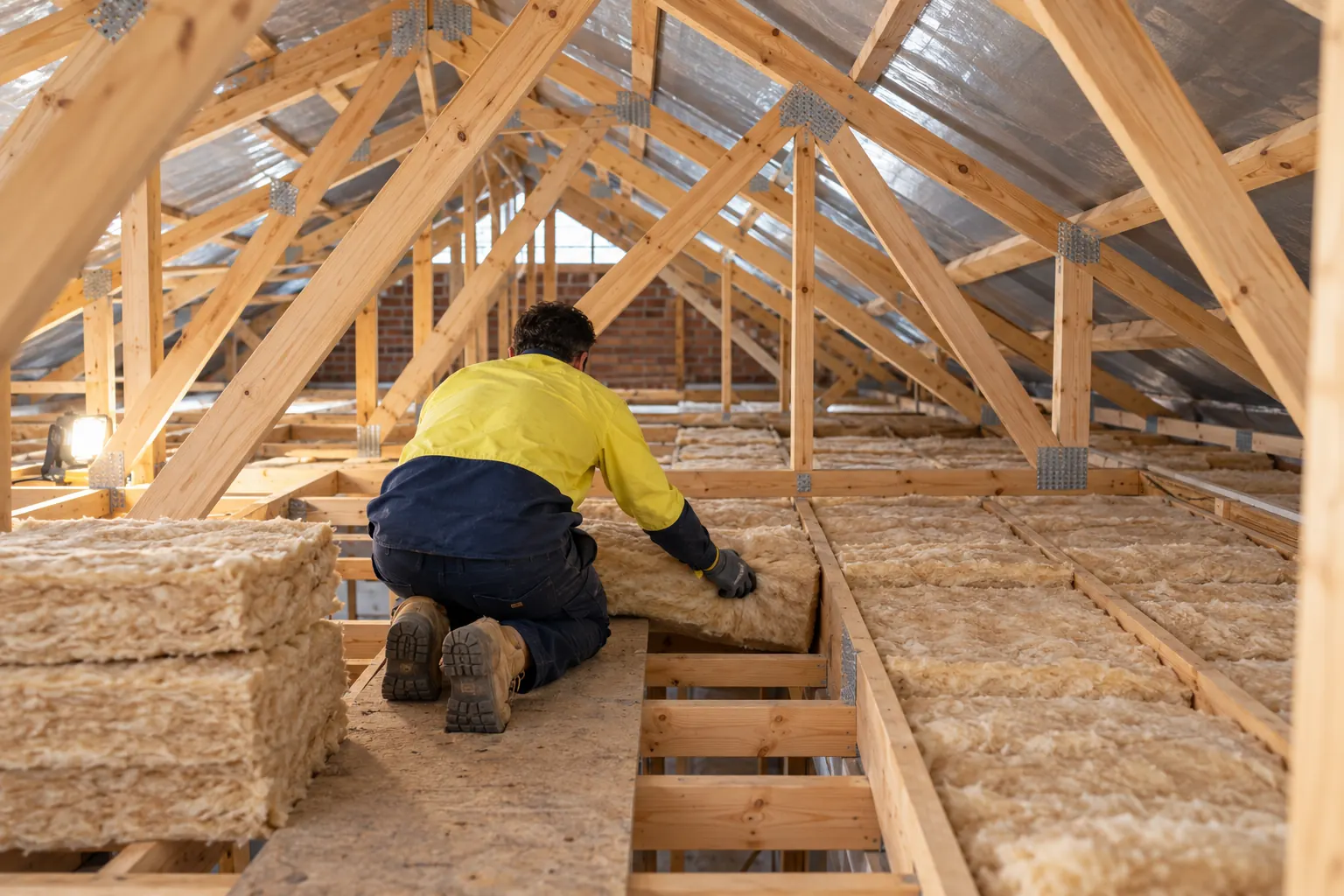
Swapping tile for sheet is not just a different covering, and anyone who tells you otherwise has not done many.
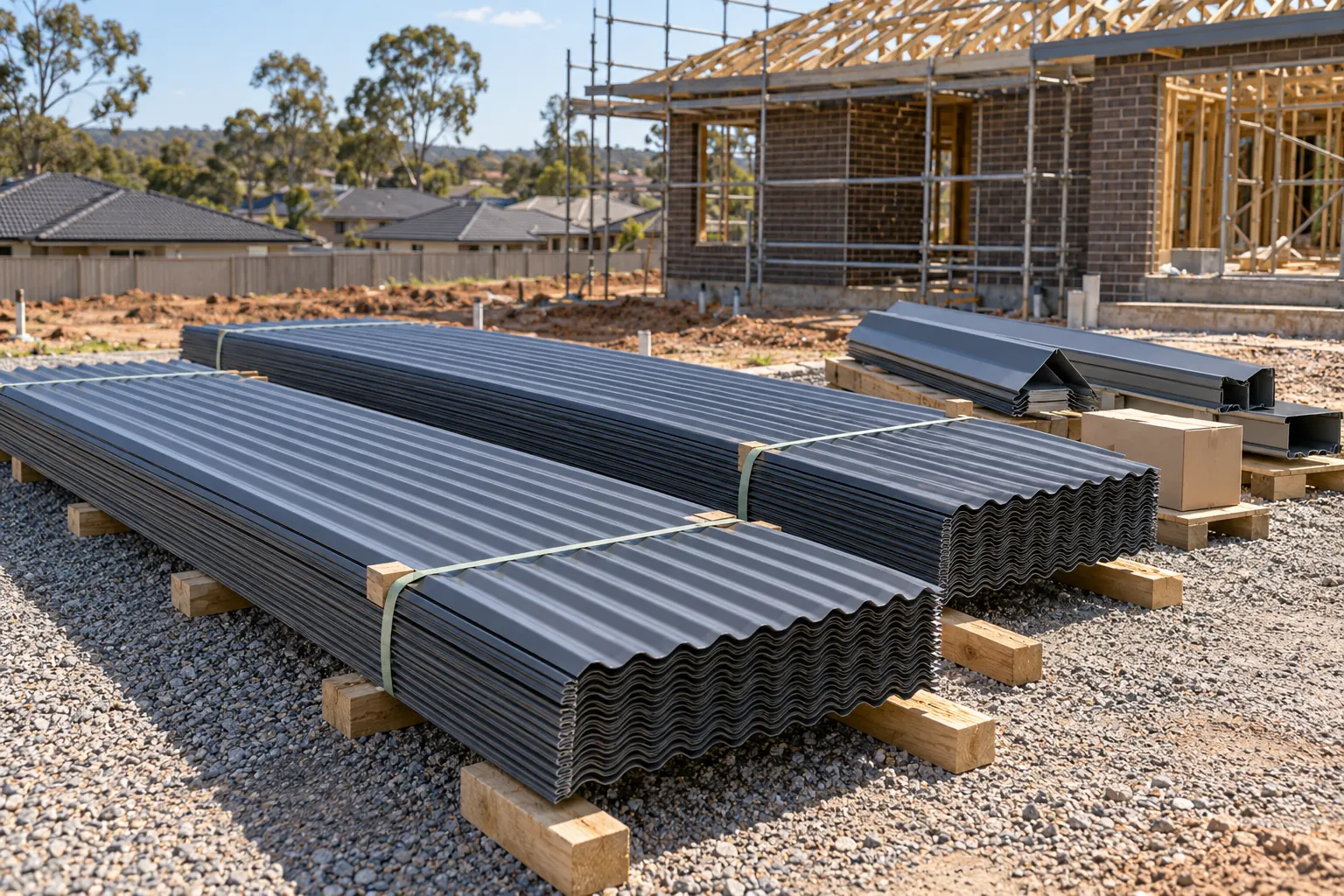
Most straightforward re-roofing on a house is exempt development in New South Wales — minor building alterations like repairing or replacing roof cladding sit outside the development application process, provided nothing structural changes and the work is like-for-like in character.
The exceptions matter locally:
If your house is in Camden or Elderslie or the older blocks near Queen Street, raise it at the inspection and we will tell you straight whether it needs council involvement.
Roof area and pitch first, then complexity: a simple gable roof over a 1980s four-bedroom in Eschol Park is a very different job to a cut-and-fill two-storey at Mount Annan with six valleys and a parapet. Access on the block, scaffolding or edge protection on steeper sites rising toward the Scenic Hills, the material and colour you choose, frame repairs found once the roof is open, and asbestos removal if bonded sheeting is present.
You will get one written number with the lines showing, after someone has been on the roof. Call (02) 4601 5100 or use the quote form, and if a restoration would serve you better we will tell you that instead.
Three tests. Do tiles crack when someone walks the roof on the correct line, which means they have gone brittle. Have you had leaks appear in different, unrelated spots rather than the same one returning. And are the battens soft where water has been sitting. A faded, mossy roof with sound tiles is a restoration candidate. A roof failing those three tests is not.
Usually yes, and it is a common change through the older estates. Metal is roughly a fifth of the weight of concrete tile, so the frame is not the obstacle. What does need checking is batten spacing, which differs between tile and sheet, and the roof pitch, since each sheet profile has a minimum pitch it can be laid at. Both get confirmed at the inspection, not assumed.
A single-storey re-roof on a standard Macarthur block is normally a matter of days rather than weeks, and the roof is never left open overnight. Stripping and laying happen section by section so there is always a watertight line, and work pauses if a storm front is coming through. Two-storey homes, steep pitches and complex hip-and-valley roofs take longer.
The tiles themselves will not be, but on homes built before about 1990 the eaves sheeting, gable infills, garage and shed roofing can be bonded asbestos cement. Anything over ten square metres of bonded material legally requires a licensed asbestos removalist, who must notify SafeWork NSW five days before starting. We identify it at the inspection and price it openly rather than discovering it mid-job.
A written workmanship warranty, the manufacturer documentation for the material installed, and a site cleared of debris including a magnetic sweep for stray fixings and tile fragments. Old tiles and sheets go off site. You should not be finding screws in the lawn in six months.
Tell us what you need and we'll get straight back to you. Prefer to talk? Call (02) 4601 5100 and speak to someone local.
Call (02) 4601 5100