Roof Repairs
Leaks, slipped tiles and cracked pointing across Macarthur, where hail dents and heat-stressed ridge mortar account for most call-outs.
Learn more →Make-safe after hail and storm damage across Macarthur, then a permanent repair. Documented inspections and written reports for your insurance claim.
Leaks, slipped tiles and cracked pointing across Macarthur, where hail dents and heat-stressed ridge mortar account for most call-outs.
Learn more →Re-roofing in tile or Colorbond for the ageing brick-and-tile estates around Campbelltown and the newer builds at Oran Park and Gregory Hills.
Learn more →Colorbond re-roofing and new installs across Macarthur, including full tile-to-metal conversions on 1970s and 80s homes.
Learn more →A cheaper alternative to replacement for Macarthur tile roofs: pressure clean, rebed and repoint the ridges, then recoat.
Learn more →Gutter and downpipe replacement sized for Macarthur storm runoff, plus leaf guard where gums overhang the roofline.
Learn more →Written roof reports across Macarthur for buyers, sellers, landlords and insurance claims.
Learn more →Hail through Macarthur does its damage in about four minutes. The consequences take considerably longer.
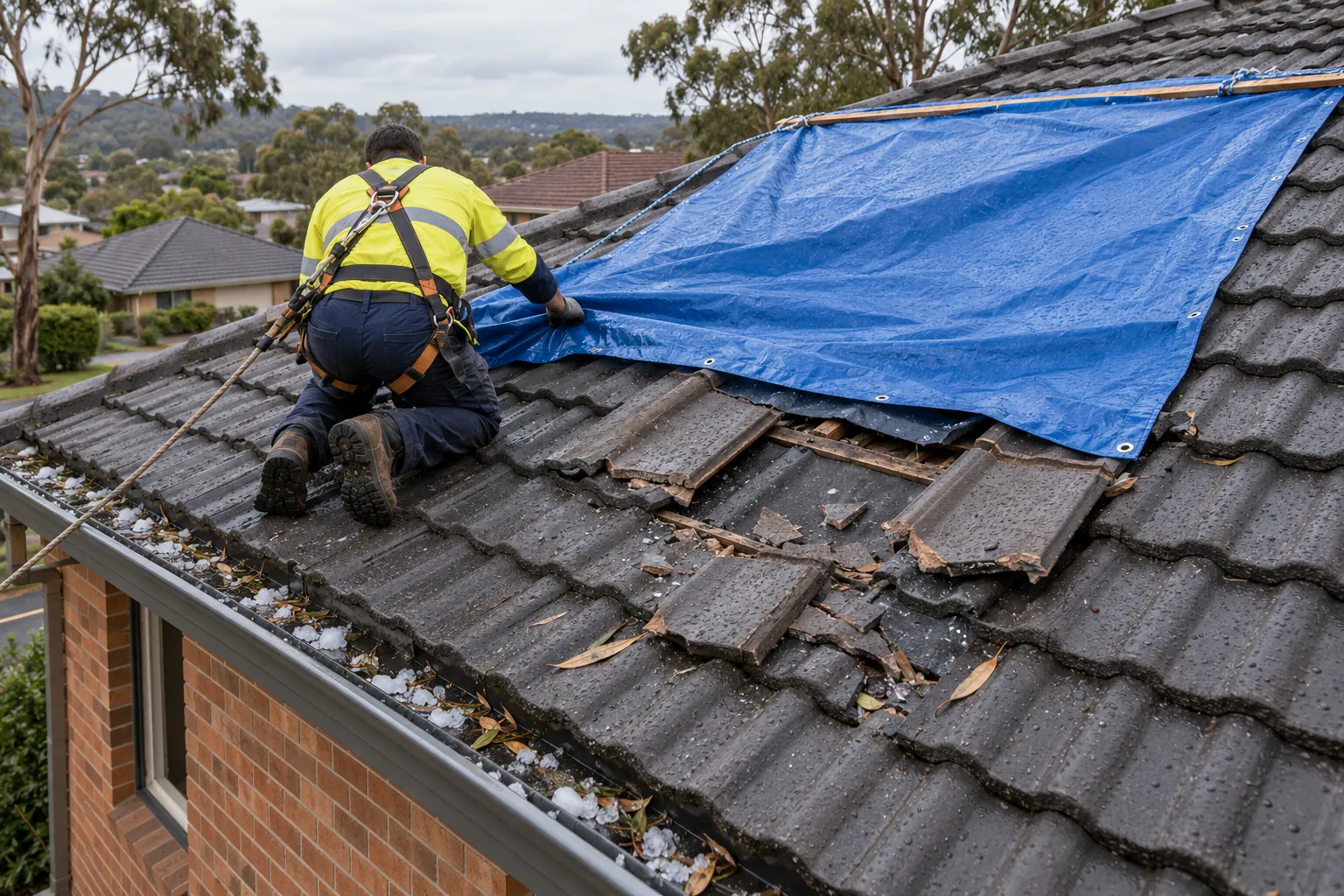
If your roof is open right now, or there is water coming through a ceiling, call (02) 4601 5100. The first job is a make-safe — getting the roof covered properly so the next band of rain does not turn a roof repair into a ceiling, insulation and flooring repair as well.
A make-safe is temporary by design and permanent in effect until the real repair happens. Done properly it means a heavy-grade tarp sized to the affected area, lapped so water runs over the joins instead of into them, and mechanically fixed and strapped to hold through wind rather than relying on weights. Broken tiles are pulled back so the tarp sits flat, and the roof is checked for anything that could fall.
It is not the finished job and it should not be charged as one. It buys the time you need to get an insurer, a report and the right materials lined up.
Concrete and terracotta tiles do not dent — they fracture. The damage shows up in three ways:
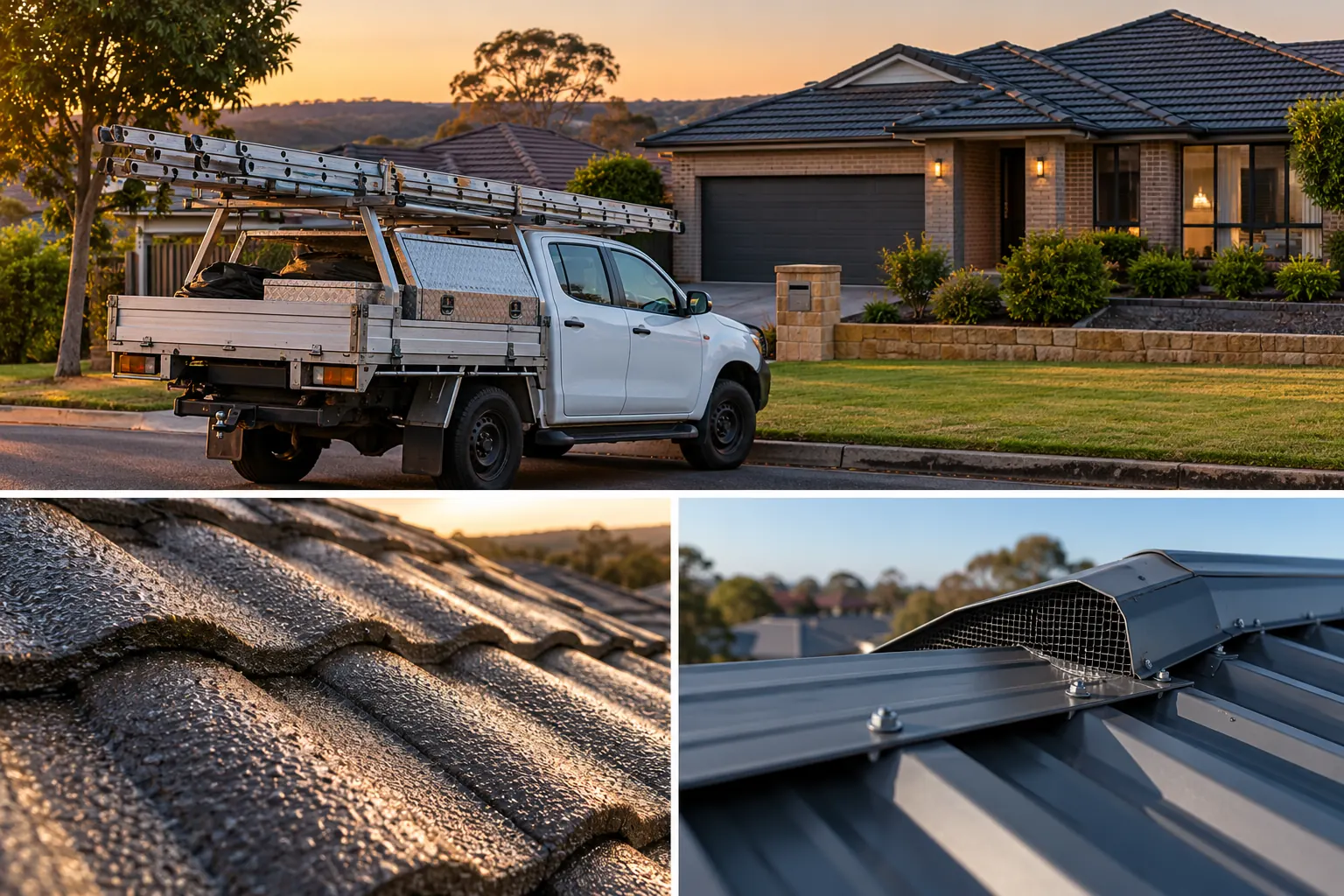
That third category is the one that gets missed and matters most. A roof that was fine last year can become a persistent leaker two winters after a hail event, because the tiles are now acting like sponges.
Steel dents rather than cracks, which is a large part of why so much of the newer Macarthur housing is clad in it. The damage pattern is different:
Hail gets the attention, but the gust front does plenty on its own. Lifted and slipped ridge caps, barge capping peeled back, whole tiles off a windward edge, and branch strikes from the mature gums through the older estates. Properties on the rising ground toward the Scenic Hills and along the exposed ridgelines take more wind than the valley floor does.
Half of storm roofing is paperwork. What we provide:
That is the same report described on the roof inspections and reports page, written with a claim in mind.
Once the claim position is clear, the permanent work is ordinary roofing again: tile replacement and re-pointing, valley and flashing renewal, gutter replacement, or a full re-roof where a whole plane is fractured. Isolated damage is handled as roof repairs.
We will not push a replacement on a roof that needs repairs, and we will not patch a roof that needs replacing and leave you to find out next season.
Call (02) 4601 5100 and describe what has happened, what you can see, and whether water is coming in right now. Active leaks and open roofs are prioritised over quoting work, because the cost of waiting compounds fast. The inspection and the written quote are free.
Protect the inside and stay off the roof. Move what you can out from under the leak, put a container down, and if a ceiling is bulging with trapped water, pierce it deliberately at the lowest point over a bucket rather than letting it collapse. Switch off power to any circuit near the water. Then call (02) 4601 5100 so a make-safe can be arranged. A wet roof with loose or broken tiles is genuinely dangerous to walk on.
Yes, as many as you safely can from the ground and from inside. Wide shots showing the house, close shots of the damage, the debris on the lawn, and the water inside. Note the date and time. Insurers assess what they can see, and photographs taken before a tarp goes on are worth a great deal later. A professional inspection then adds the detail you cannot see from the ground.
A proper make-safe is not a sheet of plastic weighted with bricks. It is a heavy-grade tarp, cut to the area, lapped so water sheds over the edge rather than into the lap, and mechanically fixed and strapped so it holds through the next front. It is a temporary measure that keeps your ceiling dry while the claim is assessed and materials are organised.
Policies differ. Some insurers appoint their own builder, some accept quotes you obtain, and most will cover reasonable emergency make-safe work to prevent further damage. Our part is the same either way: inspect properly, document properly, and give you a written report and quote that an assessor can read. What you do with it is your call.
Worth checking. The two places hail damage hides are the upper roof planes you cannot see from the footpath, and fine cracking in tiles that only shows as a leak months later when the surface coating has worn back. Soft items go first, so look at whirlybird vanes, skylight domes and gutter bases as your early warning that the tiles took a hit too.
Tell us what you need and we'll get straight back to you. Prefer to talk? Call (02) 4601 5100 and speak to someone local.
Call (02) 4601 5100